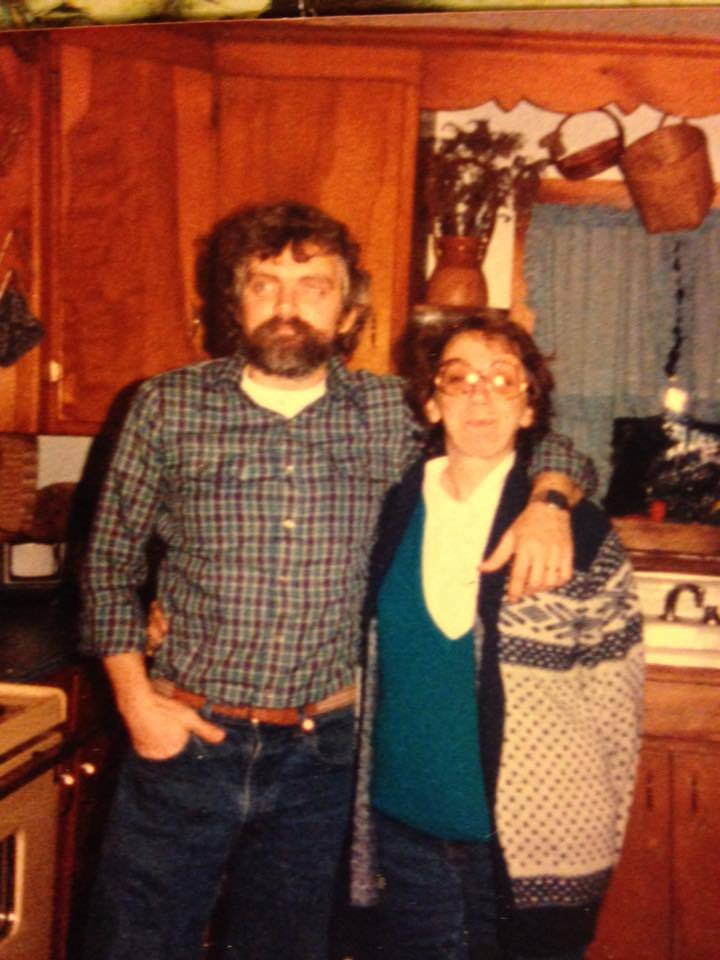
Update on Entangled

I recently completed the first draft of Entangled. I posted it on Facebook. Maine Novels by Robert Chapman. I will add some notes to the website robertwchapman.com and return to start a first round of editing and proofing. I hope to hire a professional for these two tasks as well as doing my own work on it, but truth be told, it is not recommended that a writer proof their own work. (Can’t always see your own errors or other transgressions.) Entangled is something like a memoir, but not formatted or organized as a traditional script. I like to think that it is my testimonial to the girl I fell in love with in high school and the woman I love today. Janis resides in a Unit for people who suffer dementia. However, we continue our love and our relationship today…together/apart. This book is an attempt to share our love, marriage and the unique inclusion of what Janis brought to our lives. Janis had multiple diagnoses that were the result of childhood abuse. Our love, our marriage, our lives, were caught up in the web of that early trauma. This is about my love for her and her courage and struggle with a childhood lost.

My next step is to continue to proof the text while looking to publish. This next step also involves sending the draft for our children to review before I publish. I also have someone to do the Forward to the book. A retired LCSW with experience in private practice with trauma, and in child welfare work as well. Very important credentials for this book. Then, I also want some input into design of the interior text and the cover. I am doubtful that publishers will allow me that kind of involvement. Traditional publishing companies usually want that kind of contractual control for purposes of marketing. If they do not allow me to have some creative input then I will go back to self-publishing. (Marketing is not my priority, I don’t need the income. Besides…what am I gonna do with a million dollars? Wait…

2 Comments

Filed under Alzheimer's, child abuse, dementia, mental health, Uncategorized, Writing

Alzheimer’s vs Lewy bodies?

This past month, August, is the fourth anniversary of  the beginning of Janis’s journey out of her home and our life together. The exact date I have never looked up because I don’t want to know every August in the future exactly when this all fell apart. Not an anniversary I want to celebrate. But this past August 2018,  (another August marker) Janis has taken another fall. (When I titled my first book I never could’ve known how apt it would be for me and her over time.) A fall for her is a fall for me. She became ill around the 8th of August with a high temperature. I was called at home in the early evening and told she was unresponsive. I drove in immediately. It takes about 40 min, I got there safely in about 30. Little or no traffic. I will skip some details here, but she did come around a little that evening, and the next day I was there early. It was thought to be a UTI. It took a while with antibiotics, but they brought the temp down. Skip ahead: Thursday the 16th of August, she still runs a slight temp and is not feeling well, I’m sitting beside her as she dozed in bed. She would awaken at times and I would hold her and let her sleep, then sit down again. At one point I looked up and she was in a strange position, I stood and could see what looked like a grand mal seizure. Her head thrown back, eyes rolled up and she was trembling. I went into the hallway and grabbed a CNA who came in after calling to the RN. The doctor on duty showed up, not seeing the seizure but making note of it she re-diagnosed Janis with Lewy bodies dementia!

Okay.

After 20 minutes of explanation and answering questions (not to be dismissive of the doctor, she did a sensitive and thorough review of what Lewy is (parkinsonism symptoms and AD symptoms) and why it is so difficult to make an accurate clinical diagnosis with dementia) I had to agree with her. Janis has a long and serious mental health history previous to any signs of dementia, and spent years with psychiatrists and therapists. The findings of Lewy bodies as a new diagnosis was just another blow. I can only say that I was glad Janis would not have to take another hit. At this stage, she has no idea what is happening in her life. She has been knocked around her whole life with all her diagnoses. So, after the doctor left and the RN spent a few minutes (kind, intelligent, and compassionate Julie, a wonderful, classic version of a nurse with a mission) comforting and answering questions–we were alone. I was in a daze. Janis was asleep. My head was churning away with all the new information. It was only later, after getting home, that I was able to let go. Could these 2 events on the 8th and on the 16th be related somehow? I spent days reading up on Lewy bodies. And one point stood out that I struggled with: a hallmark of Lewy bodies is early on in the disease there are episodes of hallucinations. I could not recall any such thing with Janis. I turned to her diaries and spent an entire morning perusing them, a hurtful trip through her tortured thinking. And there it was! She plainly described what can only be an episode of hallucinating. It was in December, 2005 a few years ago but within range of early onset. This entry she even described as an “hallucination”. She never mentioned it to me, and I never touched her diaries until after her placement in 2014. I’m certain now with hindsight, that there were other episodes of behavior problems that happened since 2005. It was confusing to me because she also had serious behaviors during our marriage that we dealt with that I see now as distinctly related to her mental health issues, not dementia. It has been a hard life for her. She bravely faced it down for years and later, when all else was failing her, she tried hard to hang on to that earlier coping mechanism as a girl, perky and outgoing. But it often came across only as strange, quirky, immature. But somehow–to me at least, maybe because I could see the young Janis there–as charming. I love her for her effort and for her courage to push back at the losses that she faced.

Four years. 4 Years!  And not a moment of relief from this dementia. Janis fades with every loss. I mean, sure, there are moments thank god, mostly with my grandchildren when I can laugh, when I can see the world through their youthful senses, but in the background, and always aroused with memories small, sometimes long scenarios of what it would all mean if Janis were still with me, I realize that every little thing I do is somehow connected to Janis. Everything. I would like to use that word one more time for emphasis, but I won’t.

This morning I intended to get back to writing Entangled. However, I once again find myself avoiding the text, I scanned the draft I have written so far (about half way I think) yesterday afternoon, but I can’t seem to attend to it. Not really blocked, just I’ve got so much to write about it seems overwhelming. So I compromised and wrote here instead.

Patience is not endurance. Patience is loving acceptance.”  ~Robert Aitken

1 Comment

Filed under Uncategorized

The ACE Study (just the link)

Hey, if you are a follower and know what this entry is referring to, well good. If you are not a follower of this Blog, just know that there is some background to this weird looking entry that you missed.

I finally figured out how to provide the link to the ACE Study site.  (Ah…also known as Cut and Paste theory? As the kids say, “Duh”.)  As you can tell, there is a lot of luck involved in getting this Blog off the ground.  (As Stephen King put it, our generation grew up ‘page oriented’, this generation is ‘screen oriented’). But I’m getting better at it. (Okay, just in my own defense, I haven’t really spent all this time trying to figure out how to cut and past that link. I’ve been busy.)

The Ace Study is a remarkable, longitudinal study out of the Kaiser Permanente Medical Program in San Diego, encompassing thousands of participants, over years. It is a correlative study, and so overwhelming in scope it is almost breath-taking to see the connections. See the link below. (Oh, and It’s free. Imagine that. Something for free.)

I found that Robert Sopolsky’s recently published book, BEHAVE, (Not free. But worth every dollar) provides a substantial body of research into the brain and abuse, that is a good supplemental text that dovetails into the ACE Study. But with a more neurological look at the brain, answering the questions of how and why?

https://www.cdc.gov/violenceprevention/acestudy/

It’s not necessary to read the entire study, but if it is your interest, if you have experienced childhood abuse or know someone who has, or not sure that you were abused as a child (you’d be surprised how some people missed seeing it as abuse), this is the place to be. This study, and the trainings several years ago with Dr. Felitti, was a hallmark event in my work and life. It helped both Janis and me understand what happened to Janis, and hence to us.  Sopolsky’s book put the how and why into place.

The next posting, Part Three, will be about the ACE Study (not the study itself), another brief read on Sopolsky, and a little summing up of Parts one and two.

Then back to the Blog. And Entangled.

Leave a comment

Filed under Uncategorized

The Perfect (Brain) Storm (part two)


Journal Entry from ENTANGLED


 I need to jot this down before I lose it again. Sometimes stuff comes together and I find an opening, a nugget of substance from all the chaos of self dialogue and ruminations about Janis that fill my day. My apologies in advance, this part gets a little more technical and pedantic.  It will require me to do some review and editing, But it has been crucial to my thinking and pertinent to understanding from a more objective point of view, what happened to Janis. What happened to us.

1/25/2018 Thursday

One of the hallmarks of depression is a profound sense of helplessness. Stress, even in normal doses causes people to make lousy sometimes disastrous decisions. Trauma feeds that stress and can lead to PTSD which (vicious cycle) leads to chronic stress. Anxiety beats it all up, keeping the amygdala chronically over stimulated, and the brain swimming in glucocorticoids (a hormone secreted from the adrenal glands, and in large doses, no friend to neurons). When a child suffers abuse and little or no protective factors are involved, the development of the frontal cortex is ‘blunted’, offering little or no executive input to help the amygdala calm down.* Poor decisions continue and the cycle rolls on. The now over-active amygdala, expands, and buzzes with chronic over-stimulation (fear, anxiety) while the frontal cortex remains impaired and underdeveloped. Emotions run the gamut and the pressure takes its toll over time.  Depression and anhedonia (the inability to experience pleasure) appears at some point and further interferes in the (frontal cortex) processes of decision making, judgement, emotional feedback, etc. All this and more, (e.g. the harm done to the hippocampus and other areas of the brain from PTSD), leads to a sense of helplessness, hopelessness, to anhedonia, to submissiveness, and submissiveness leads to vulnerability which all makes for a perfect brain storm in the development of  the social/emotional life of the developing child.

*( I like this description by Sopolsky, of how the frontal cortex interacts with the amygdala: at some point in development around adolescence  the frontal cortex develops the ability to inhibit the amygdala by intervening: ‘ “I wouldn’t do this if I was you.” But after childhood abuse the amygdala develops the ability to inhibit the frontal cortex, saying, “I’m doing this and just try to stop me.” ‘ fm Behave, by Robert Sopolsky)


When I worked as a liaison for the Department of Health and Human Services at the juvenile corrections center in South Portland, my assigned cases were youth (18 y.o and younger, some even preteen), incarcerated for crimes, some very serious, but most not so serious. My caseload were all in the custody of the State of Maine’s Child Protective Care (aka foster care). These were kids raised, most not all, in impoverished, abusive conditions, most already had DSM psychological diagnoses and a history of substance abuse. Many of these children came to my attention and sometimes to my office, with behavior problems including cutting behaviors. This self abusive behavior was deemed by Corrections as an attention getting manipulation. When I interviewed these kids, or asked a youth outright (individually), what they were getting from cutting themselves (a painful way to get attention) they responded, child after child, consistently, that they  felt nothing, they described helplessness, hopelessness, being trapped, unable to feel anything; cutting helped them feel something. (One described it as needing to feel she was alive, that she existed). This cutting was the extreme in a list of behaviors throughout their young years, calling for help from abuse they could not speak of,  (unspeakable ). These children had displayed behaviors throughout their childhood to get attention. The help they got was incarceration for their acting out behaviors. More isolation. More sidelining and ignoring. More abuse. More punishment. No one was asking (or caring) why. What happened to them that caused them to act out, to be so self abusive as young children, and then cutting themselves while in a child’s prison? It was as if they had reached the end of the road. Cornered.  Cutting themselves was the next-to-the-last expression they could come up with. The last expression was suicide. Could these children have been suffering from depression and PTSD?

(Of course the flip side of all this is the opposite: the individual can lash out with aggression. Sometimes they may slip back and forth, aggressive/submissive. It’s a matter of degree. But that’s another story. These kids had acted out enough to get the attention of law enforcement. Most victims act on themselves. Act out. Act in).

The frontal cortex is the last development of the nervous system–think, brain. (The pre-frontal cortex is part of this). The healthy brain is not completely online and fully developed until well into the mid-twenties. Let’s consider this, the executive features of the brain, the reasoning, decision-making, judgement, (social decisions with our fellow humans is included here), problem solving, control of impulsivity, etc.,  is not even fully functional until the mid-twenties, on average; so what does this mean for a child exposed to ongoing abuse and neglect? Sexual assault, emotional abuse, physical abuse, cruelty, with little or no protective factors in their lives? What happens in their developing brains, and what is life like for them as young adults or as adults?: well, a lifetime of high stress and anxiety while navigating a complex maneuvering through not just decisions, but for them a minefield of decisions with loaded consequences; and PTSD makes for a heightened sensitivity to even minor stressors, of life’s little decisions (like paying the bills, sick child, getting homework done on time, car trouble, should I be hanging out with this person) with an impaired computer. Child abuse impacts not only the frontal cortex, but most of the limbic system, including the amygdala, hypothalamus, and the hippocampus. Now include genetics, social, economic, environmental, and cultural factors in a child’s development. Wait. We should think about this, right?  Oh, and then add the societal implications, e.g.costs of treatment, physical health, medical…

Whoa. Childhood matters.

(More in Part 3.)  The ACE study.  Adverse Childhood Experiences


Leave a comment

January 29, 2018 · 12:54 pm

The Perfect (Brain) Storm (part one)

There are two bodies of work that I want to present at the beginning of this post, and if I can figure out how, I will attach a couple of links for those interested in looking into this a little more.

The first is a huge body of research by Vincent Felitti, MD, with the Kaiser Permanente Medical Care Program in San Diego:  Turning Gold into Lead, The Relationship of Adverse Childhood Experiences to Adult Health (ACE Study). I met Dr. Felitti at a training workshop several years ago. Later, following the publication of my book, A Certain Fall*, he invited us both to a workshop in Bangor, Maine. I introduced him to Janis. We spoke for a few minutes about her history and the ACE Study.

The second is a recent book by Robert M. Sopolsky,  professor of biology and neurology at Stanford University.  BEHAVE, The Biology of Humans at Our Best and Worst. A book that covers, as the title states, biology, the nervous system and the impact of child abuse on the brain and physical health of humans. This book, though a little challenging (kinda technical and immensely detailed in places) is a humbling and sobering look at what happens to the brain and bodies of children suffering abuse. And coupled with Dr. Felitti’s work, and my own thirty plus years in child welfare, jolted me, when I understood what I had intuited all these years with Janis: she suffered The Perfect (Brain) Storm.

As I continue to work on Entangled, I sometimes get lost in the 50+ years of our lives together. Adding to that, the theme of the book is not just a biographical text, but a text that describes how Janis fought back against the darkness, the fog of depression that covered all  her days, the courage, the determination it took to get through her daily life. And in the end to leave her home, her two cats, her trips to the sea collecting sea glass, her family, and enter a locked unit to wait…

So why write about this? Really. It’s depressing. Why? Because Janis wanted to help others. She held a deep compassion and empathy for victims (including all wildlife and domestic animals. I’m still wading through all the mailings, magazines, and materials she subscribed to. Anyone need a free wildlife calendar? Or maybe some cute kitten stickers, address labels? Wrong address a problem?) She and I hoped that by sharing about her life it may help, even just a little, to build an awareness of the significance of early childhood abuse and the disastrous effect it has on our society. I’m convinced that if we can find a way to end or at least diminish the prevalence of child abuse in our culture, hell, all cultures world wide, it will make life a little sweeter for all our children, but as Felitti and Sopolsky attest, it may solve most of society’s problems: physical and mental health, addictions, violence, etc.

These posts will promote both of the above texts and point out some of the findings they have generated. It is an education worth pursuing.

Okay. Now how do I link you to some data sites?  Hmmm. If all else fails, check my Facebook page for a link to any sites that carries information on the ACE Study.

* A Certain Fall, published in 2005 is now out of print, I will be revising and updating this book for a new edition. There may be some old, early editions available as used books via Amazon.

http://www.robertwchapman.com / FB: Maine Novels by Robert Chapman


Leave a comment

Filed under Alzheimer's, child abuse, Writing

Entangled

I’m slowly making progress on this work. I still have only a loose idea of the structure the text will take. I am subtitling it A Compendium Of Us. For now, anyway. I will attempt to work more on this Blog as I work on the book. This entry is taken from the Introduction.

Entangle.
I was surprised when I looked up the definition to find mostly negative sounding definitions for this word. For example (hard copies, of course) Merriam Webster Dictionary: tangle, confuse. I went to Roget’s 21st Century Thesaurus 2nd edition: bewilder, burden, complicate, puzzle, interweave (less negative), intertwine (better). When searching for a word that somehow grasped the nature of our relationship for a title, I selected entangled, because I understood this word as a mostly positive term. I view our life, my life with Janis, together as something like braiding or weaving, ancient-sounding terms that seem, strong, gentle, loving, and sharing. I understand this is a romantic portrayal, and I am aware that it also has its shortcomings. I also considered symbiosis as a title. However, it sounded too perfect, a botanical-sounding term (“mutually beneficial”) that left little room for the imperfections (not always mutually beneficial) that occur in any long-term relationship. So,in my definition entanglement embodies mostly positive elements, with the understanding that there is always room for human missteps.

Leave a comment

Filed under Uncategorized

Journal Entries from “ENTANGLED”

[Journal entries are nearly all written contemporaneously  during visits while Janis sleeps, or shortly after leaving her. I confess that I am reluctant to include the really unpleasantness of some visits. For example, when she has been encopretic, and needs to be cleaned up and changed, or requires a shower. Her behavior is extreme and distressful. And though I’ve tried to deal with this myself, it requires 2 people to safely attend to her.  And the emotional level is unbearable. I now let staff handle this. I leave the area so that I can’t hear her. Nevertheless, I will attempt to be as candid as I can while respecting Janis’s dignity, for the sake of presenting an honest presentation of dementia. Of course, when the book is edited some entries may not gain entry. As I have said before in other places, with the writing and publication in 2005, of A Certain Fall, and the training modules that we conducted, Janis made it clear that she wanted her experiences with trauma to be of help to others where possible. So I work on Entangled with that in mind.]

For you Janis. I love you.


5/19/2017 Friday

Yesterday, my self-imposed day off, it was 95F. and humid, and nearly that in the apartment. I installed the AC and ran it all day. Today it is 80F. I am at the unit with Janis now. The power went out here just a minute ago. I got up and checked doors (fire doors release when power goes off). Staff were hustling but did not seemed overly concerned. I went to the Nurse’s Desk. They were checking, but no answers yet. All seems okay. We will wait for a few minutes.

When I found (power just came back on) Janis this a.m. she was curled up on someone else’s bed. Not unusual. I went to her room and dropped off my stuff. When I returned to the room she was napping in, she was standing, back-to-me, staring at the room and appearing a little confused. I touched her shoulder, she turned and burst into a smile, she hugged me and mumbled something incoherent. We kissed. She called me by name,”Bobby.” First time in a long while that she has used my name. Later, we went to lunch back in her room instead of the Dining Room. This is private time for us, although we sometimes eat in the Dining Room with the others when Janis is inclined. After lunch, (roast chicken with gravy, mashed potatoes, string beans, yogurt, pie, and drinks) she looked up at a photo on her wall that came from our living room at home. It was something she had put together in a frame. A picture of me and her at about the ages of 9 or 10 on either side of a photo of our three children, Stacia, Bo, and Maya. I always liked this framed capture of our children between their 2 parents as children. Janis had a real talent for creating something special out of ordinary objects.  I took the photo down and handed it to her. She tried to express herself: “This is (moving her hand across the photo)…this is, all of it…Everything!” She was matter-of-fact, not emotional. She seemed to want to convey to me that this was important to her. Later on, as she started to doze off, I leaned close to her and mouthed (“I love you.”), “I love you too,” she whispered. A small smile. This was more talking than she had made recently: a random moment where the neurons fired someplace in the correct order.


6/10/2017 Saturday. Hot and Sunny.

Janis had a major yelling, screaming, fighting battle, while being cleaned and changed. I could hear her down the hallway. I cringe when this happens. I had tried to attend to this myself in the past, thinking it would be easier for her. But, it doesn’t matter who takes care of her at these times, she is in a full blown panic (PTSD) attack. She is assigned two very good female CNA’s now, (it takes 2 people).

I met Janis as she walked out of her room. Crying her heart out. I grabbed her and she clung to me. “I don’t…I don’t…my husband…” She weeps, then, “I can’t do this. I can’t do this.” A refrain since she was placed. It leaves me weak in the knees. I held her to my chest, stroking her hair and speaking directly into her left ear (no hearing in right ear and questionable hearing in her left), I speak loudly into her left ear, “You’re okay. I’m here. I will always be here. I won’t forget you. I won’t lose you.” Later, after she had calmed, I held her and we slow-danced easy and with familiarity, while I sang You Are My Sunshine directly into her left ear. She Beamed! Her whole mood changed. And later, we watched an old B+W Mickey Rooney and Judy Garland film and she laughed at least a half dozen times, loved the choreographed dance scenes. A little more verbal. Ate a full lunch today.Walked the hall a little for the exercise. She tires easily. Her gait has changed dramatically. She has trouble with stairs. Her steps are child-like and weak. She went to bed in her room. I stayed and held her hand until she was asleep. I left.

6/15/2017 Thursday

There’s a Team Mtg later today. I visited Janis before the meeting. She is very sleepy lately. Sleeps much of our visits away. But I hold her hand. Today, I crawled up onto her bed beside her to rest. I’ve been very tired all week this week. I spooned with her, and I fell asleep. I awoke holding her close. We had slept for at least a half hour. We had cuddled and slept together for the first time in 2 1/2 years.

Notes from the Team Mtg. : No changes in her meds recently. She has been off  the anti-psychotic med for sometime now and doing okay. Her kidney is still at stage 3. No significant change. Thyroid okay. She weighs 134, gained 1 lb from last month. Mood has been better. Doing better at her regular shower periods. But still panics when soiled and cleaned. Her morning washing and dressing has been less contentious. Good appetite, esp at breakfast. Lost a lot of verbal interaction. Almost non-verbal. Her gait has deteriorated to a very slow pace. Sleeps a lot.

~      ~      ~

[The book I am attempting is titled ENTANGLED. It is a compendium, subtitled: ‘All That Was Us’. I am struggling to find a format that makes some sense. It will include some journal entries, some biographical material, some thoughts and essays on related topics, some poetry, excerpts from Janis’s journals and diaries, and some of her miscellaneous notes. The cover, I hope, will be a painting of hers that I consider one of her best. It’s titled SIX LEAVES, and its simple beauty is its charm…much like the artist herself. ENTANGLED will be self published through Create Space at Amazon. ]

website: http://www.robertwchapman.com


Leave a comment

Filed under Uncategorized

TIME.

 Time.

In the Memory Care Unit that Janis is in, I have met numerous residents and have learned something about their previous lives. Always, I’m interested in what they did for work. There is so much to be said for what careers or jobs these people spent their time on. It gives me pause to think of the time that we spend in this life. It becomes more apparent to me that we are what we have done. Not just in our work, but also in our daily lives. Time is the real currency. And the rules say we can’t earn it back by working overtime later on. We only get this one moment to live, just once, and then it is gone. Sort of like having a pocket full of change in life’s arcade. Spend it, because the rules say you cannot save it. And remember, that what you spend it on, says something about who you are.

So what will you spend your change on today?

A wise, but brooding and serious man once said, “Do not waste this life.” I suspect he lived in ancient times and likely was a monk.

Leave a comment

November 3, 2016 · 7:12 pm

“UNTITLED”

do you remember

our first kiss?

me walking you home

holding hands beneath shy stars?

do you remember this?


do you remember

our small farm in winter

blanketed in deep snow?

in spring? in summer?

peepers in the pond

crickets in the fields?


do you remember

bright autumns

carousel of colors

burning leaves

laughter of our children?

do you remember this?


do you remember

our first kiss?

the touch of my hand?

the color of my eyes?

do you remember this?


strolling  an ocean beach

seeking peace and treasures

gifts from the sea?

do you remember me?


~9/3/2016


Leave a comment

Filed under Alzheimer's

Visiting Janis

I have had some very good visits lately with Janis.

Here’s the thing: Everything about this disease is rich in trickery, deception, confusion. For instance. I have had some very good visits lately with Janis. This means, the visits went well. Very little angst, crying, pleadings to go home, less toileting problems, etc. I find this easy. Quieter. Less stressful. More opportunities to hug, kiss, hold hands…

But what does this really mean?  Of course we all experience good days and bad. She is entitled to have bad days as well as some really good days, without me reading too much into it. But the real truth is, I see decline. I see her slip a little further away. So when I’m alone I face the truth. The easy visits mean less Janis.

Nevertheless, if I accept this it is a way to use these easier visits to provide her with more affection, closeness, and a patient acceptance, that calms her as well as me. The simple act of just holding her is a powerful, tender comfort for us both. This is important because she is still very tuned into my demeanor. In the middle of one recent teary episode (both of us), she recovered long enough to put a hand on my face and said, “Are you okay?” She does this now and then when I lose it, and it helps me to pull together, so I tell her, “Yes. I’m okay. You helped me. Thank you.” We kiss. She smiles.  It amazes me how the emotion brings us together, just when it seems to be slipping away. (I speculate that for her it has something to do with adrenaline during the stress of emotional upset. But that’s me always trying to read more into what I’m seeing.) It doesn’t last long, but in the moment it is extremely touching for her to be so concerned for my well-being. And I accept it for what it is. And I’m grateful for it.

The most important lessons I have learned over the past two years is that denial is powerful, acceptance takes time…lots of time, and acceptance is not abrupt, it’s not a light switch. It’s about letting go. It’s a gradual process that I’m still working on. I’m not letting go of Janis, I’m letting go of our lives together. There was supposed to be so much more. When visiting her and she’s sleeping, I find myself watching the unit and the other residents whom I’ve come to know by name and personality. I speak with them. I assist them in small ways. I watch staff interact with residents with genuine compassion. I laugh with residents when they are having a moment of levity. I have come to know and respect the compassionate staff: the nurses, CNA’s, the physicians and practitioners, the Aides, the housekeepers, the dining staff. I’ve met other spouses and family who visit with their folks. (We chat, but keep it brief. We know what our purpose is and who gets our time.) But, especially the residents. I have mourned when some have passed on…I miss them…they all have become a part of Janis’s world and mine. How much our lives have changed.

At times, when I’m more able to be philosophical about all this and less emotional, I understand that life is about letting go. Letting go of things like a breath, a day, a pet, letting go of ideas, plans, letting go of property/things, and letting go of the people we love.

I am working (part time) more this summer, the busiest season of the year at the museum. And I babysit my grandchildren twice a week. This has forced me to let go of some of the time I have used visiting Janis. (This is good for me. Children have a way of bringing us right into the moment and keeping us there.) But, not by much because I need the visits. It’s hard to let go. I have shaved an hour off from some of my visits. Down to 3 hours per visit. And I have tried to go to three visits a week which is especially difficult to adjust to, because it usually means that I’m gone 2 consecutive days per week. I find that is about the limit. I did take a small break this summer, one to my daughter’s in Virginia for 2 days and another on a 2 day camping trip with my son. By the second day, I begin to get antsy, I need my Janis-fix. But visits are very important. I am extremely conscious of time these days. It is finite. One thing about getting older is that truth about finite time becomes reality, and I have no idea how much time Janis and I have left for each other.

 “The only constant in life is change.” Buddha


1 Comment

Filed under Alzheimer's